Hip Rainbow: A Typeface That Dares to Be Different
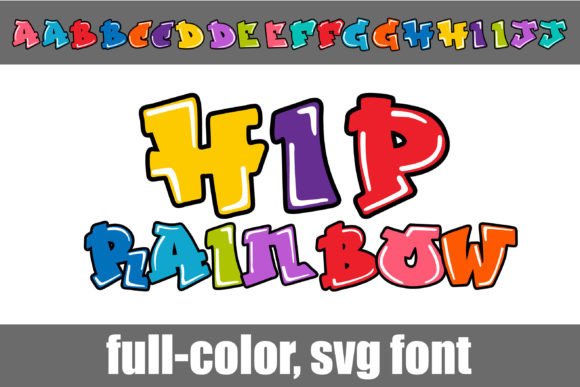
There are moments in design where subtlety is the goal, and then there are moments where you need to grab the viewer by the shoulders and demand attention. If you have ever struggled to find a typeface that feels energetic, youthful, and unapologetically fun without looking amateurish, you have likely hit a common roadblock. Typography is the voice of your visual communication, and finding a voice that screams "vibrant" while maintaining professional integrity is the holy grail for many creatives. Enter Hip Rainbow, a typeface designed specifically to bridge the gap between playful expression and bold design execution. It is not just another font; it is a visual statement characterized by its bubbly curves and sharp, decisive edges.
For small business owners, content creators, and designers, the challenge is always finding assets that stand out in a crowded market. We often default to safe, neutral fonts because we are afraid of making a mistake. However, the market is currently saturated with minimalist sans-serifs and elegant scripts. There is a growing demand for "personality" in branding. Hip Rainbow answers this call by offering a distinct aesthetic that is full of color and life. It manages to be quirky without being childish, making it a versatile tool for anyone looking to inject some energy into their projects. Whether you are designing a logo for a new startup, creating social media graphics that need to stop the scroll, or packaging a product that needs to pop off the shelf, understanding how to leverage a font like this can change your entire design strategy.
The Anatomy of Energy: Curves, Edges, and Attitude
What makes a font "hip"? It comes down to the tension between its shapes. If a font is entirely round, it can look soft and squishy, perhaps too infantile for a serious brand. If it is entirely angular, it can feel aggressive or rigid. Hip Rainbow strikes a fascinating balance. It utilizes "bubbly curves" to create a sense of approachability and warmth, but it anchors those curves with "sharp edges" that provide structure and a modern, street-style attitude. This duality is what gives the typeface its unique energy.
When you look at the letterforms, you see a personality that is confident. This is a premium font that doesn't whisper; it speaks with clarity. This visual characteristic makes it particularly effective for display purposes. It is built to be seen at large sizes, where its details can be fully appreciated. For graphic designers working on editorial layouts or poster designs, this means you don't need to add many other decorative elements to make the page feel full. The typography itself becomes the art. The visual weight of the characters ensures that your headlines carry the necessary gravity to draw readers into the body copy below.
Real-World Applications: From Packaging to Digital Screens
Theory is nice, but practical application is what matters when you are on a deadline. How does a creative font like Hip Rainbow fit into your current workflow? The answer lies in its versatility across different media. Because this is a display font, it shines brightest in contexts where short bursts of text carry high impact.
Branding and Logo Design
If you are launching a brand that targets a younger demographic—think Gen Z or Millennials—or a brand that wants to convey joy and creativity, this typeface is a strong contender. Imagine a logo for a frozen yogurt shop, a music festival, a trendy apparel line, or a digital agency that specializes in bold campaigns. The "bubbly" nature of the font suggests friendliness, which builds instant trust, while the sharpness suggests that the brand is current and relevant.
Packaging Design
In the world of packaging design, shelf appeal is everything. Consumers make split-second decisions. A font that feels generic will get lost in the noise. Hip Rainbow can help a product stand out on a crowded shelf. It works exceptionally well for snack foods, cosmetics targeting teens, or artisanal goods that want to break away from the "rustic/handwritten" trend and go for something more electric. It signals that the product inside is fun and worth trying.
Social Media and Marketing Assets
Mastering the Pairing: Readability and Contrast
One of the biggest concerns with using a bold, quirky display font is readability. No matter how beautiful a typeface is, if your audience can't read the message, the design has failed. This is where the concept of "font pairing" becomes essential. You should rarely use a font like Hip Rainbow for long paragraphs of body text. The eye tires of reading complex shapes for extended periods.
Instead, think of Hip Rainbow as the headline act. It sets the stage. For the supporting cast—the body copy—you need a typeface that is quiet, legible, and neutral. A clean sans-serif font or a simple serif font works perfectly here. For example, pairing Hip Rainbow with a standard, light-weight sans-serif creates a beautiful hierarchy. The headline screams personality, while the body text whispers the details. This contrast not only looks professional but actually improves the readability of your overall design by guiding the reader's eye exactly where you want it to go.
When testing your pairings, pay attention to the "x-height" and the visual weight. Because Hip Rainbow has a strong presence, your body font needs to be distinct enough that it doesn't compete. Avoid pairing it with other decorative or handwritten fonts, as this will create visual chaos. Let the headline font do the heavy lifting for the vibe, and let the body font do the work for the information.
Unlocking Potential: The Power of PUA Encoding
For the designers and crafters who love to tinker with details, the technical specifications of a font matter just as much as its looks. Hip Rainbow is PUA (Private Use Areas) encoded. If you aren't a font nerd, this might sound like jargon, but it is actually a massive practical benefit. Essentially, PUA encoding means that every single glyph, swash, and stylistic alternate included in the font package is accessible to you, regardless of what software program you are using.
Sometimes, fancy ligatures or alternate characters get locked away in professional design software like Adobe Illustrator or InDesign. PUA encoding breaks down those walls. This means if you are using a program like Silhouette Studio for crafting, or even basic word processors for quick layouts, you can still access the full character map. You can copy and paste those special swashes to customize your logo or add a unique flourish to a wedding invitation. This level of accessibility makes Hip Rainbow not just a design asset, but a highly functional tool for hobbyists and professionals alike. It ensures that you get the full value of the premium font you purchased.
A Practical Guide to Stylistic Choices
When you install Hip Rainbow, take a moment to explore the full character map before you start designing. Often, we stick to the default letters because we are in a rush. However, creative fonts often come with "hidden gems" in the form of stylistic sets. You might find alternative versions of letters like 'a', 'g', or 'r' that have slightly different curves or flourishes.
Experiment with these alternates to see how they change the rhythm of the word. Sometimes, swapping out just one letter in a logo can turn a good design into a great one. It prevents the text from looking too repetitive or "templated." Additionally, look at the punctuation marks and numbers. In display typography, the numbers are often just as important as the letters, especially for price tags, dates on posters, or data visualization. Hip Rainbow's vibrant style ensures that even your statistics look exciting.
Final Thoughts on Commercial Use and Licensing
Finally, a word on professionalism. If you are using Hip Rainbow for client work or selling merchandise (like t-shirts, mugs, or prints), you must ensure your licensing is in order. Most premium fonts come with specific licenses. A "Desktop" license usually covers creating logos and print materials. However, if you plan to sell digital products where the font is embedded (like a downloadable PDF planner or a website template), you may need a "Web" or "Extended" license.
Always read the End User License Agreement (EULA) that comes with the font. Respecting licensing isn't just about avoiding legal trouble; it is about supporting the type designers who create these incredible assets. When you pay for a font, you are investing in the future of creative design. By choosing a high-quality, PUA-encoded font like Hip Rainbow, you are equipping yourself with a versatile, eye-catching tool that can elevate your branding, engage your audience, and bring a unique, vibrant energy to anything you create.